Top 10 Must-Try Foods in Hyderabad
Walk near the Charminar at dusk, and you aren’t just breathing air—you’re inhaling the aromatic scent of cardamom and sweet woodfire. Many outsiders worry that Hyderabad cuisine is simply a collection of overly spicy rice dishes, but locals know it is a 400-year-old story told on a plate.
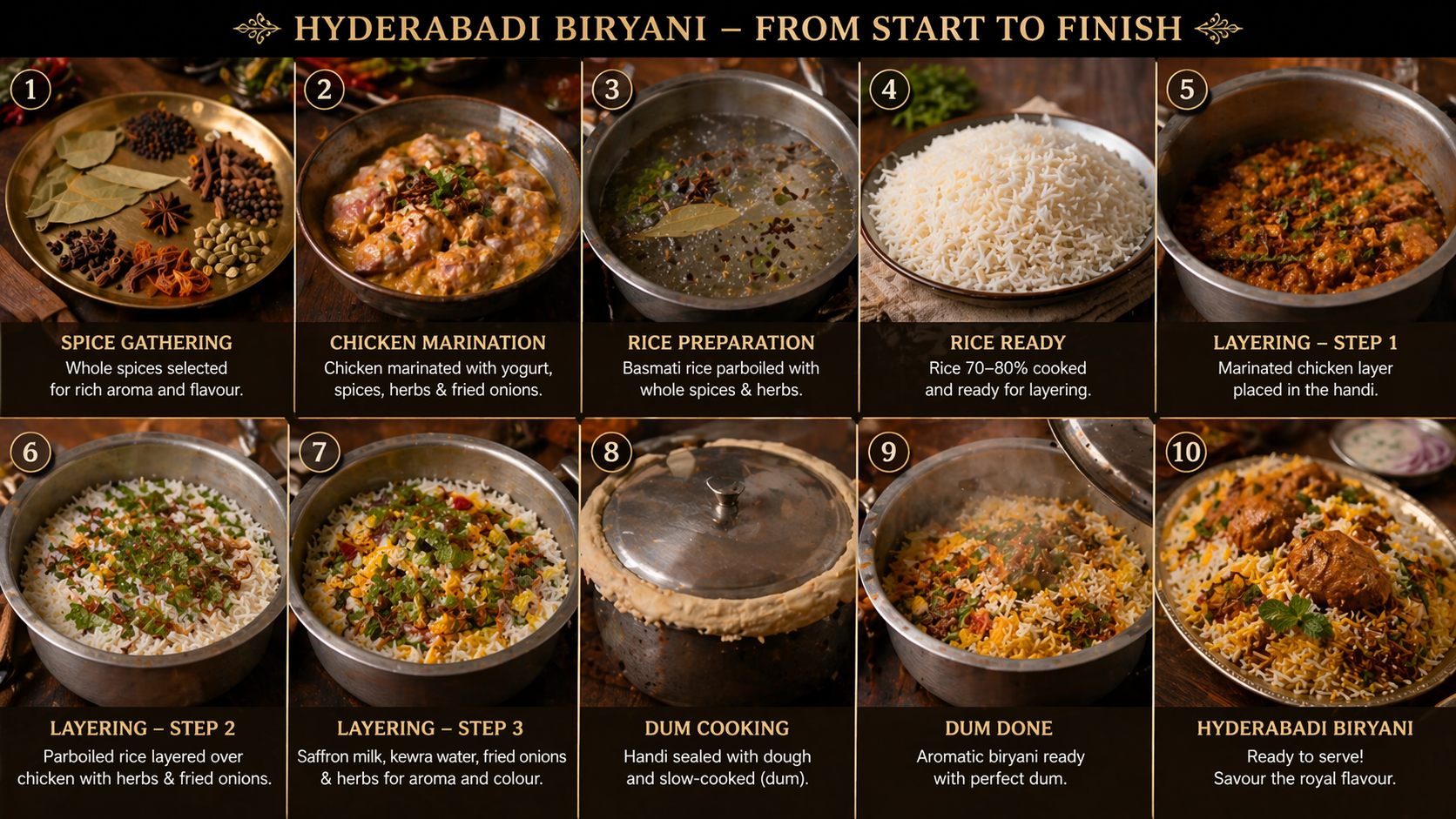
This unique identity stems from the History of Nizami cuisine and royal flavors, where rich Persian ingredients seamlessly merged with rustic, fiery Telugu spices. At the heart of this legacy is "Dum" cooking. Think of it as a natural pressure cooker: sealing a heavy pot with dough traps every ounce of steam, producing richly spiced meats that yield to the slight pressure of a fork.
Global institutions have certainly taken notice. According to the United Nations, which designated the region a UNESCO Creative City of Gastronomy, this culinary heritage is undeniably world-class. To eat like a true insider, diving into these must-try foods in Hyderabad is your perfect starting point.
The Crown Jewel: Decoding Authentic Hyderabadi Biryani
Most visitors know biryani simply as mixed rice and meat, but local tradition splits this dish into two distinct camps. You likely know Pakki Biryani, where ingredients are cooked separately then layered. Yet, the city’s true masterpiece is Kacchi Biryani. Here, raw, marinated meat is topped with partially cooked rice and sealed tightly in a pot to steam together, creating unbelievably tender cuts that absorb every ounce of flavor.
Exploring Hyderabadi Biryani vs Lucknowi Biryani differences reveals exactly why the southern version is so revered. While the northern Lucknowi style is delicately fragrant, Hyderabad's plate is unapologetically bold. The contrasts fall into three specific areas:
Spice Level: Hyderabad uses a fiery, robust whole spice blend, whereas Lucknow favors mild aromatics.
Meat Marination: Southern cooks soak raw meat in yogurt and papaya overnight for intense flavor.
Rice Texture: Hyderabadi techniques yield firmer, distinct grains richly stained with saffron.
A classic Paradise vs Shah Ghouse biryani comparison helps navigate local menus based on your palate. Paradise offers a milder, highly consistent entry point for newcomers. Conversely, purists hunting for authentic Hyderabadi biryani restaurants in Old City flock to Shah Ghouse, where the spice profile hits much harder.
Beyond this daily staple lies a seasonal marvel: the Ramadan ritual, and the reason why Haleem is worth the wait.
The Ramadan Ritual: Why Haleem is Worth the Wait
While biryani anchors the daily menu, the holy month of Ramadan brings a different culinary rhythm through evening Iftar traditions. Breaking a day-long fast demands instant, sustained nourishment, making Haleem the undeniable star. This savory, slow-cooked porridge of meat, lentils, and broken wheat acts as a comforting nutritional powerhouse, delivering essential slow-releasing energy to the body.
Achieving this hearty masterpiece is a grueling labor of love. Cooks spend hours performing the Ghootna, a continuous manual pounding process using massive wooden mashers over wood-fired cauldrons. This rhythmic technique breaks down the meat fibers until all the ingredients completely meld together. When judging quality, simply check your spoon: authentic Haleem boasts an incredibly smooth, uniquely elastic texture, never a chunky one.
The glowing alleyways of the Old City offer the definitive answer for finding the best Haleem during Ramadan. Exploring the heritage street food joints near Charminar reveals historic stalls ladling out piping hot bowls to midnight crowds. After finishing this rich stew, locals invariably seek a place to relax, seamlessly transitioning into the Irani café culture: tea, biscuits, and centuries of conversation.
The Irani Café Culture: Tea, Biscuits, and Centuries of Conversation
Stepping into a high-ceilinged café transports you into a historic Persian legacy. These bustling community hubs revolve around Irani Chai, a brew vastly different from your standard morning cup. To order like an insider, request it Paani Kam—meaning "less water." This local etiquette yields a deeply rich, milky tea simmered slowly for hours until it becomes beautifully thick and velvety.
Identifying authentic Osmania biscuits requires checking for a delicate, melt-in-the-mouth crumble. A true biscuit features a precise salt-to-sugar ratio, offering a savory-sweet balance that cuts perfectly through the heavy tea. Alongside rich bread puddings, these buttery baked goods frequently serve as iconic desserts to end a Hyderabadi meal or to simply anchor long afternoon conversations.
Lingering here provides a gentle respite from the region's intensely flavored profile. While these creamy teas soothe the palate, the city's savory masterpieces depend on complex Nizami spices. Once rested, your tastebuds will be ready for the fiery heat and tangy tamarind of local banquet favorites: Mirchi ka Salan and Baghara Baingan.
Heat and Tang: Mastering Mirchi ka Salan and Baghara Baingan
A plate of biryani isn't complete without its faithful companion: salan, a velvety gravy. While familiar spices like cumin play a supporting role, the real magic stems from a creamy paste of roasted peanuts, sesame, and coconut. This nutty foundation defines the most famous vegetarian dishes in Hyderabad cuisine.
Balancing a heavy royal meal requires clever acidity to cut through rich fat. Enter Mirchi ka Salan (piquant green chili gravy) and Baghara Baingan (eggplants prepared with baghara, a crackling hot-oil tempering). The sharp tamarind in these recipes acts as a necessary culinary palate cleanser, keeping every bite tasting fresh.
Ordering these vibrant sides is straightforward, firmly establishing them among the best Hyderabadi dishes for any diner. Simply request extra salan alongside your rice to fully experience the meal. Having tasted this delicate vegetarian harmony, you are ready for the city’s most dramatic meat-focused spectacle: cooking on scorching granite.
Cooking on Lava: The Ancient Art of Pathar ka Gosht
Centuries ago, Hyderabad’s Nizams needed a way to cook game during royal hunting expeditions. This practical challenge gave birth to Pathar ka Gosht (meat cooked on stone). To ensure fall-off-the-bone tenderness in the wild, chefs began aggressively marinating the lamb in raw papaya paste before firing it.
Replacing conventional metal skillets with scorching granite fundamentally changes how protein sears. The thick stone retains intense, even heat, trapping juices and creating an unmatched smoky aroma. Mastering Pather Ka Gosht preparation requires this specific crust: cooks apply traditional Nizami spice blends and cooking techniques featuring coarse black pepper and roasted onions.
The final bite delivers a profoundly earthy delicacy that yields effortlessly to a fork. After indulging in these heavy, fire-cooked evening feasts, locals pivot to entirely different dawn rituals, waking up to slow-simmered comforts like Nihari and Paya.
The Breakfast of Kings: Waking Up to Nihari and Paya
While the city sleeps, Old City alleys are already preparing traditional breakfast dishes. Crowds gather at late-night food spots for travelers and locals, drawn by meats simmering since sunset. The stars are two distinct, velvety broths: Nihari, a rich, spice-heavy stew of tender meat, and Paya, a lighter but incredibly gelatinous trotter soup.
Neither slow-cooked marvel is complete without Kulcha, a thick, soft bread baked in an earthen oven. Experiencing this feast requires following a deeply satisfying local ritual:
Tear off a generous piece of warm Kulcha.
Dip it deeply into the shimmering stew.
Scoop up the delicate bone marrow.
Squeeze fresh lemon over the bite to cut the richness.
For a safe, authentic excursion, visit reputable eateries near Charminar just before sunrise when the pots are freshly opened. After conquering such robust, savory flavors, your palate will naturally crave sweet symphonies like Double ka Meetha and Qubani ka Meetha.
Sweet Symphonies: From Double ka Meetha to Qubani ka Meetha
After a savory feast, iconic desserts offer necessary sweetness. Double ka Meetha is a decadent bread pudding soaked in saffron milk and fried in ghee. The name stems from "Double Roti," the local term for Western sandwich bread that swells to double its size when baked.
Those seeking a fruity finish prefer Qubani ka Meetha, a velvety apricot compote. This dish highlights the Persian influence on the region, where royal chefs elevated dried fruits using subtle royal spices. The slow-simmered, tart apricots are traditionally crowned with rich cream or crunchy almonds.
Selecting your dessert depends entirely on balance. Choose the luxurious bread pudding after a lighter lunch, or rely on the bright apricots to cleanse your palate after rich meats. Having satisfied that sweet craving, the culinary journey continues beyond the main course: Lukhmi and Hyderabadi street eats.
Beyond the Main Course: Lukhmi and Hyderabadi Street Eats
Stepping away from formal dining reveals a thriving snack culture. While most of India reaches for a familiar potato-filled samosa, Hyderabad prefers the Lukhmi. This flat, square pastry swaps the thick crust for a flaky shell stuffed with piquant minced meat. Seeking these authentic bites inevitably leads to the bustling heritage stalls of the Old City.
Miles away, a modern scene unfolds. The budget-friendly eateries in Gachibowli and Hitech City cater to a fast-paced crowd. Here, vibrant carts serve Punugulu—crispy, deep-fried fritters made from fermented rice and lentil batter. These airy, golden spheres offer a perfect vegetarian counterpart to the city's royal, meat-heavy traditions.
Tasting both the ancient alleys and tech corridors helps you fully understand this diverse landscape. Now, let’s map out these flavors in your 24-hour Hyderabad food tour.
Your 24-Hour Hyderabad Food Tour: How to Eat Like a Local
You arrived knowing only the word "Biryani," but you are now equipped with the ultimate Hyderabad food tour itinerary for beginners. You can confidently skip overhyped tourist chains and navigate the city's rich layers, bridging the centuries-old heritage of the Old City with the vibrant modern energy of Hitech City.
Start your adventure and prevent food fatigue by pacing yourself with this perfect one-day schedule:
7 AM: Savor a slow-cooked Nihari breakfast.
1 PM: Experience authentic, dum-cooked Biryani.
5 PM: Pause for Irani Chai and Osmania biscuits.
9 PM: Conclude with rich, saffron-laced desserts.
These must-try foods in Hyderabad aren't just meals; they are edible history. By embracing local dining etiquette—trusting the spice levels and eating with your right hand—you will experience the culture authentically. Begin with a morning tea, and let every bite guide you deeper into the city's rich culinary heritage.
-
We're a restaurant SEO marketing agency. Restaurant SEO marketing optimizes a venue's online presence to rank higher in local search results, driving hungry diners to its website, menu, or reservation platform.
-
Key steps include claiming a Google Business Profile, targeting location-specific keywords (e.g., "biryani near me in Hyderabad"), publishing mobile-friendly and indexable menu pages, and earning positive customer reviews to maximize visibility and increase physical foot traffic or online orders
-
From startups to seasoned brands, we partner with small and medium sized restaurants, working with their web presence, Google Business profiles and their delivery platform menus and analytics.